How Much Does Equipment Rental Insurance Cost in 2026?
By Josh Cotner
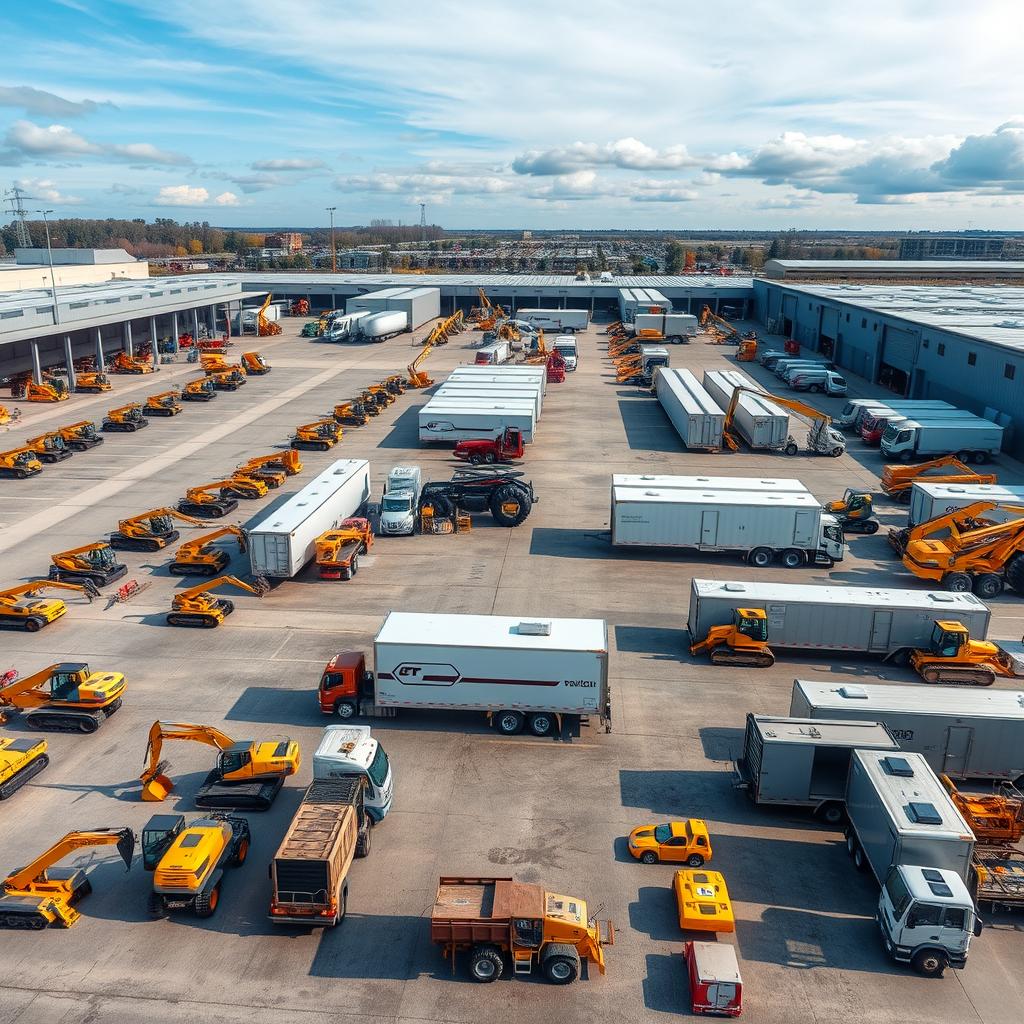
Equipment rental companies carry real exposure. Your machines leave the yard every day, operated by people you've never met, on job sites you can't inspect. When a skid steer gets buried in a trench collapse or a boom lift disappears from a job site over the weekend, the loss hits your balance sheet immediately—unless you have the right insurance in place.
So what does equipment rental insurance actually cost? The honest answer: it depends heavily on what you own, how much it's worth, and how you run your operation. This guide gives you real benchmark numbers, explains what moves the needle on your premium, and shows you how rental yards typically structure their programs.
Typical Annual Premiums for Equipment Rental Companies
Most small to mid-size equipment rental yards—those with fleets valued between $500,000 and $3 million—should budget for a total annual insurance program in the range of $8,000 to $35,000 across all lines. Here's how that typically breaks down:
| Coverage Line | Annual Premium Range | |---|---| | Inland Marine / Equipment Floater | $3,500 – $18,000 | | General Liability ($1M/$2M) | $2,500 – $7,500 | | Commercial Auto | $2,000 – $8,000 | | Workers' Compensation | $3,000 – $12,000+ | | Equipment Breakdown | $800 – $3,000 | | Commercial Umbrella ($1M) | $1,200 – $3,500 |
The inland marine / equipment floater line—which covers your physical equipment against theft, damage, and loss—is usually the largest single cost for rental yards because it tracks directly against fleet value.
Equipment Type Matters More Than You Might Think
Not all heavy equipment is priced the same way by underwriters. Machines with higher theft rates, greater replacement costs, or more complex mechanical systems carry higher floater premiums.
Skid Steer Loaders
Compact track loaders and skid steers are among the most commonly stolen pieces of equipment in the U.S. Underwriters know this. A single $65,000 skid steer might cost $1,200–$1,800 per year on a scheduled floater, depending on your security setup and claims history. GPS tracking can bring that down meaningfully.
Excavators (Mini and Full-Size)
Mini-excavators in the 5–10 ton range are also high on the theft list due to ease of transport on a standard trailer. Rates on a $90,000 mini-ex typically run $1,600–$2,400 per year. Full-size excavators in the 20–35 ton class cost more in absolute terms but may carry a lower theft rate per dollar of value—insurers price them at roughly 1.5%–2.5% of scheduled value annually.
Boom Lifts and Scissor Lifts
Aerial work platforms carry a different risk profile: lower theft frequency, but significant damage and maintenance exposure. A fleet of 10 scissor lifts valued at $25,000 each might run $3,500–$6,000 on a blanket floater, depending on operator liability exposure and your rental agreement structure.
Air Compressors and Generators
Towable compressors and generators are frequently rented on short-term contracts and often transported by customers in pickup trucks. Rates are typically lower as a percentage of value—roughly 1.0%–1.8% annually—but losses from road accidents and improper hookup are common.
Forklifts
Forklifts used in warehouse and industrial settings carry significant liability exposure alongside the physical damage risk. If you rent forklifts into customer facilities, general liability underwriters will scrutinize this closely. Equipment floater rates on forklifts typically run 1.2%–2.0% of scheduled value.
What Drives Your Equipment Floater Premium
Total Fleet Value (Insured Value)
The single biggest driver. Equipment floater premiums are priced as a percentage of the total scheduled or blanket value of your fleet. Rates typically range from 1.0% to 3.0% of insured value per year for well-run rental operations. A $1.5 million fleet at 1.8% costs $27,000 just for the floater.
Underwriters look at replacement cost vs. actual cash value (ACV) coverage—replacement cost premiums run 15%–25% higher but eliminate depreciation disputes after a loss.
Annual Revenue
Many underwriters use revenue as a secondary size factor. A rental yard doing $2 million per year looks different to an underwriter than one doing $300,000. General liability premiums in particular are often rated on payroll or gross receipts.
Claims History
A three- to five-year loss run is the first thing a specialty underwriter asks for. One large theft claim or a series of smaller damage claims will push your premium up at renewal. Companies with clean histories for five or more years can often negotiate rates at the lower end of the range.
Where Your Equipment Goes
Do your machines stay local—within 50 miles? Or do you rent to customers hauling equipment to remote mountain job sites four states away? Coverage territory and the customer base you serve matter. Rental yards serving mining operations, pipeline work, or disaster recovery tend to pay more.
Security and Telematics
GPS tracking on all units, perimeter fencing, and after-hours monitoring can all qualify you for security credits from underwriters. Some carriers offer explicit rate reductions of 5%–15% for GPS-equipped fleets. This is one of the few controllable factors that can move the needle year over year.
Rental Agreement Language
Underwriters reviewing your submission will often ask for your standard rental agreement. Agreements that shift liability clearly to the renter, include damage waiver disclosures, and specify that renters must provide their own insurance reduce the moral hazard in the underwriter's view.
How Inland Marine / Equipment Floater Rates Work
Unlike commercial auto or general liability, inland marine pricing isn't heavily regulated—it's a specialty line where underwriters have broad freedom to price based on the actual risk profile. The rate is almost always expressed as a rate per $100 of insured value.
For example: a rate of $1.75 per $100 on a $2,000,000 blanket floater = $35,000 annual premium.
Rates vary by:
- Scheduled vs. blanket coverage: Scheduled policies list each piece individually; blanket policies cover a category of equipment up to a stated limit. Blanket is simpler to administer for high-turnover rental yards but may carry a slightly higher rate because it's harder to monitor.
- Deductibles: Raising your per-occurrence deductible from $1,000 to $5,000 can cut the floater premium by 10%–20%.
- Co-insurance provisions: Some inland marine policies include co-insurance clauses requiring you to insure to at least 80%–90% of actual value. Underinsuring creates penalty exposure at claim time.
Short-Term Rental Insurance Cost Considerations
Short-term rental operations—daily, weekly, or event-based rentals—face a pricing challenge: equipment moves frequently, customer quality is less predictable, and utilization rates are high. Some specialty markets price short-term rental yards at a 10%–20% surcharge over standard rental operations because of the higher throughput and increased customer damage exposure.
If you run a mix of long-term and short-term contracts, document the split clearly in your submission. An underwriter who sees "60% of revenue from rentals under 30 days" will price that differently than one who assumes month-to-month agreements.
Bundling and Package Discounts
Placing multiple coverage lines with a single specialty carrier or through a program like CCA's equipment rental program typically yields a 10%–20% total package discount compared to buying lines separately through standard markets. Carriers that specialize in rental yard risks understand the exposure better and often offer more favorable rates than a standard commercial lines carrier trying to shoehorn a rental yard into a generic BOP.
CCA places equipment rental insurance through specialty markets that understand the rental yard risk profile—not standard carriers who've never underwritten a fleet of boom lifts. That familiarity translates directly into more accurate pricing and fewer coverage gaps.
Getting an Accurate Quote
To get a quote for your equipment rental operation, you'll typically need:
- Current equipment schedule (make, model, year, value for all units)
- 3–5 year loss runs from your current carrier
- Annual gross receipts for the past 2–3 years
- Copy of standard rental agreement
- Description of territory (states where equipment operates)
- Safety and security measures in place
The more complete your submission, the more accurately a specialty underwriter can price your risk—and the more likely you are to get favorable terms.
The Bottom Line
For a small rental yard with a $750,000 fleet, a realistic all-in insurance budget for 2026 runs $12,000–$22,000 per year including inland marine, GL, auto, and workers' comp. Mid-size operations with $2–3 million in fleet value should budget $30,000–$55,000 for a complete program.
These are ranges, not guarantees. Your actual premium depends on the factors above—and on finding the right specialty market that understands the rental business.
Ready to see your actual number? CCA specializes in equipment rental company insurance programs. Get a quote and we'll build a program around your fleet, your customers, and your risk tolerance.
Need this coverage for your rental fleet?
Get a real quote in about 15 minutes — we shop A-rated specialty rental markets.