What Insurance Does an Equipment Rental Company Actually Need?
By Josh Cotner
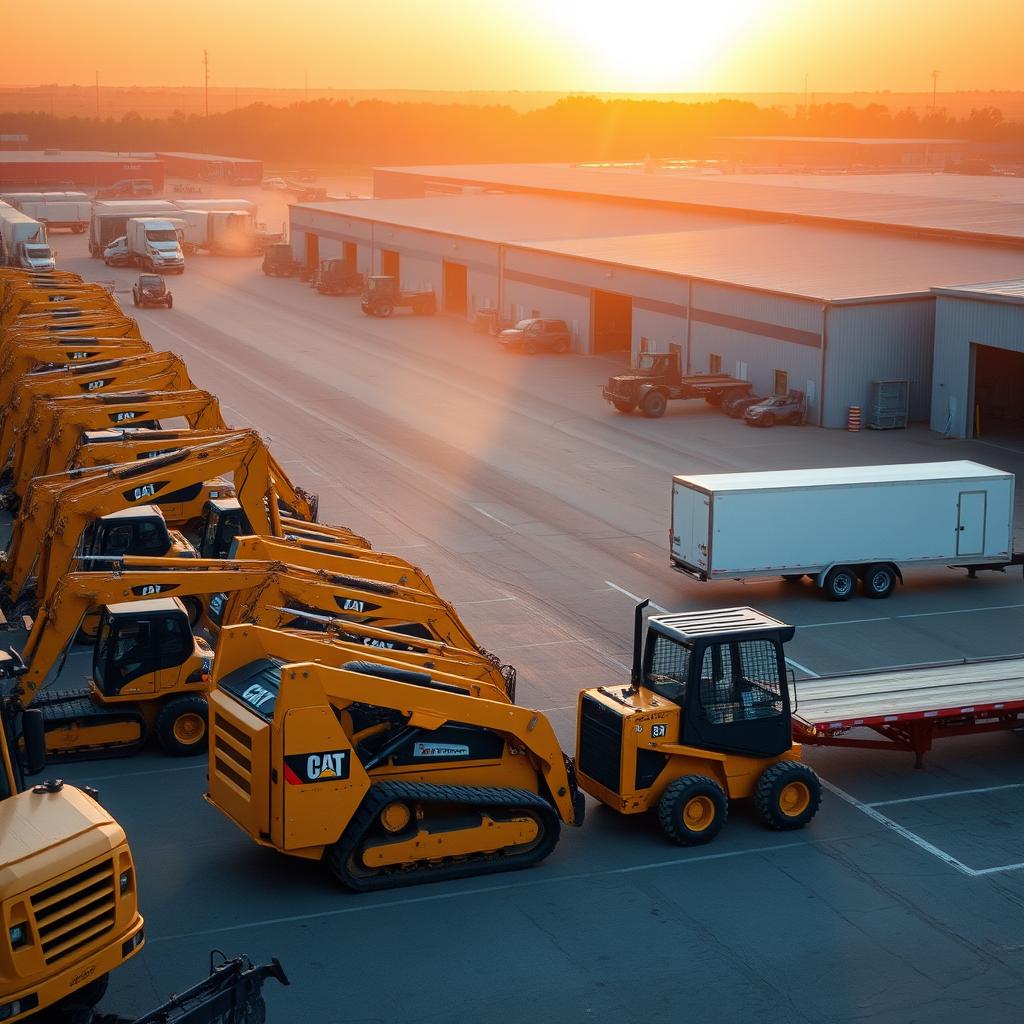
An equipment rental company isn't a contractor. It isn't a retailer. It isn't a warehouse. It's a business where the core asset—expensive, heavy, mobile machinery—leaves your control every day and gets used by people whose skill levels, safety practices, and job site conditions you can't directly supervise.
That unique risk profile means your insurance program needs to be built differently from a contractor's policy or a standard commercial business package. Here's a plain-language breakdown of what a properly structured equipment rental company insurance program looks like in 2026.
Core Coverages: What Every Rental Yard Needs
1. Inland Marine / Equipment Floater Insurance
This is the foundation of any rental yard's program. Standard commercial property insurance covers property at a fixed location—your yard. The moment your equipment rolls out the gate, that coverage largely evaporates. An equipment floater follows the equipment wherever it goes: to customer job sites, in transit, and back.
What it covers:
- Physical damage from accident, collision, fire, vandalism, and operator error
- Theft—including theft from job sites and in-transit theft
- Mysterious disappearance (equipment rented out that doesn't come back)
- Damage in transit on your delivery trucks and trailers
Why it's non-negotiable: Your equipment is your business. Without this coverage, a string of theft losses or a single large damage claim can wipe out the working capital that keeps your fleet running.
Typical structure for rental yards: Many rental companies use a blanket floater for their working fleet, which covers all equipment within a stated category up to a total limit, without requiring you to list every unit. This works well for high-turnover operations where the fleet composition changes frequently.
2. General Liability Insurance
General liability (GL) protects you against third-party claims for bodily injury or property damage that arise from your business operations. For equipment rental companies, GL exposure is significant and specific.
The scenarios that matter:
- A customer operating your equipment injures a bystander or a co-worker. Even if the operator is the customer's employee, you may be named in the resulting lawsuit as the equipment owner.
- Your delivery driver damages a customer's driveway or fence while delivering or picking up equipment.
- A piece of your equipment that was inadequately maintained causes a mechanical failure that results in an injury.
Key coverage features to verify:
- Products and completed operations: Covers claims arising from the equipment you rent out, even after it leaves your possession.
- Independent contractors: If you use subcontractors for delivery or maintenance, make sure they're covered or that your policy addresses how subcontractor operations are handled.
- Limits: Most GCs and large commercial customers require at least $1M per occurrence / $2M aggregate before they'll accept your equipment on site. Some large customers require $2M/$4M.
GL does not cover: Damage to your own equipment. That's the equipment floater's job. These two policies work in tandem, not as substitutes for each other.
3. Commercial Auto Insurance
If your business owns trucks, delivery vehicles, flatbeds, or equipment trailers, you need commercial auto coverage. Personal auto policies explicitly exclude business use, and the vehicles used in equipment rental operations are almost always engaged in commercial activity.
What to think about:
- Hired and non-owned auto (HNOA): If employees or contractors use personal vehicles on company business—running parts, making deliveries in their own truck—HNOA coverage fills the gap your commercial auto policy leaves.
- Trailer coverage: Equipment trailers are often insured under the commercial auto policy. Make sure high-value trailers are scheduled accurately—their replacement costs have risen significantly since 2020.
- Loading and unloading: Damage that occurs while loading or unloading equipment may be covered under commercial auto or GL depending on the specific circumstances. Know which policy responds.
4. Workers' Compensation
If you have employees, workers' comp is legally required in nearly every state. For equipment rental companies, the relevant class codes and experience modification factors can vary significantly based on what your employees do: yard labor, equipment operators, delivery drivers, mechanics, and counter staff all carry different risk levels.
Key considerations for rental yards:
- Mechanics and yard workers who operate heavy equipment are typically classified at higher premium rates than office staff.
- Delivery drivers face both workers' comp exposure (their own injuries) and commercial auto exposure (accidents on the road).
- In some states, coverage requirements extend to part-time employees and seasonal workers—a significant issue for rental yards that ramp up staff during spring and summer construction season.
Specialty Coverages: Important But Situational
Equipment Breakdown Insurance
Equipment breakdown insurance (sometimes called boiler and machinery, or mechanical breakdown coverage) covers the sudden and accidental breakdown of mechanical or electrical equipment—the kind of damage that an equipment floater typically excludes.
An equipment floater covers external events: theft, collision, weather, vandalism. It doesn't cover a hydraulic pump that fails because of internal mechanical failure, or an engine that seizes due to a manufacturing defect. Equipment breakdown insurance covers those internal failures.
Why rental companies should consider it:
- Your equipment is used continuously by customers who may not follow correct maintenance procedures.
- High-utilization equipment is more prone to mechanical breakdown than owner-operated equipment that gets serviced by someone with skin in the game.
- Breakdown claims can be large—rebuilding an excavator's hydraulic system or replacing a forklift transmission costs real money.
Equipment breakdown coverage is relatively affordable (typically $800–$3,000/year for a mid-size rental fleet) relative to the exposure it covers.
Rented-to-Others Coverage
This is a specialized inland marine endorsement or stand-alone policy that specifically addresses the scenario where your equipment is in a customer's custody and sustains damage. Some equipment floaters include this automatically; others treat it as an optional endorsement; and some standard commercial policies exclude it entirely.
"Rented-to-others" coverage is specifically designed for companies that rent out equipment they own to paying customers—which is exactly what you do. It bridges the gap between your equipment floater (which covers your physical assets) and your general liability (which covers third-party claims), addressing the middle scenario: your equipment, in someone else's hands, gets damaged or destroyed.
Verify whether your current policy includes rented-to-others coverage by name. If it doesn't, you may have a gap.
Commercial Umbrella Insurance
A commercial umbrella policy provides excess liability limits above your underlying GL, commercial auto, and workers' comp policies. It kicks in when a claim exceeds the limits of the underlying policy.
When it matters for rental companies:
- Large general contractors increasingly require $5M or more in combined liability limits before they'll permit a piece of your equipment on their project.
- A serious bodily injury claim—someone is critically injured operating your equipment—can easily exceed a $1M GL limit.
- An umbrella is typically the most cost-efficient way to reach high limits: $1M in umbrella coverage commonly costs $1,200–$3,500 per year, far less than raising your underlying GL limits to the same level.
What You Can Usually Skip
Business Owner's Policy (BOP): Standard BOPs are designed for small brick-and-mortar businesses. They typically include a commercial property policy (which won't cover your off-premises equipment) and a GL policy (which you do need, but can get separately). The property component of a BOP is usually money wasted for rental companies. Buy your GL and your inland marine separately through a specialty market.
Professional liability / E&O: Unless you provide specialized consulting or operator training services as a paid offering, professional liability is not typically necessary for equipment rental operations.
Cyber liability: Worth considering if you run a modern rental management system with customer payment data stored online, but typically not a first-priority purchase for most rental yards.
What Your Customers Will Require
General contractors and large commercial customers will ask for a Certificate of Insurance (COI) before allowing your equipment on their project. What they require varies by customer, but common requirements include:
- General liability: $1M per occurrence / $2M aggregate (minimum). Some large GCs require $2M/$4M.
- Commercial auto: $1M combined single limit.
- Inland marine / equipment floater: Proof of coverage on the specific equipment being delivered to the site.
- Additional insured status: They'll want to be listed as an additional insured on your GL policy, which means your policy would respond to covered claims involving them.
- Waiver of subrogation: They may ask that your insurer waive the right to subrogate (pursue a claim) against them after paying a loss.
Not every customer will require all of these, but having a GL policy with additional insured endorsements available is table stakes for serving commercial construction customers.
How a Rental Yard's Risk Profile Differs from a Contractor's
This is worth understanding because many standard markets try to place equipment rental companies as contractors. They're not.
| Factor | Contractor | Equipment Rental Company | |---|---|---| | Equipment location | Contractor's own job sites | Customer-controlled job sites | | Operator | Contractor's trained employees | Customer's employees (unknown skill level) | | Equipment custody | Operator has daily contact | Equipment may go days without owner contact | | Maintenance control | Owner controls service schedule | Owner has reduced visibility | | Volume of operators | Small, consistent crew | Many different operators per unit per year |
The rental yard owns equipment that is operated by many different people on many different sites. Underwriters who understand this—specialty inland marine markets—price it appropriately. Standard commercial markets often add exclusions or restrictive conditions when they realize the exposure, or they simply don't offer the right coverage forms.
Real Scenarios: What Gets Claimed at Rental Yards
Scenario 1: Customer damages your excavator A landscaping contractor rents your 6-ton mini-ex for a week. On day three, the operator catches a ledge rock with the bucket, bending the arm and damaging the slew ring. The customer has minimal insurance and no renters liability coverage.
Your equipment floater pays for the repair. Your rental agreement should also include a damage provision that allows you to charge the renter for the deductible, but in practice, collecting on that can be difficult. The floater is the backstop that keeps this from being a cash loss.
Scenario 2: Theft from a job site Your skid steer is on a customer's residential development site. Over a long weekend, it vanishes—no witnesses, no camera footage. The local police report goes nowhere. Replacement cost: $72,000.
Your equipment floater (including theft and mysterious disappearance coverage) pays the claim. Without it, you've lost a $72,000 asset with no recourse.
Scenario 3: Customer injured operating your equipment A customer rents a telescoping boom lift. A platform safety pin is improperly engaged, and the platform drops unexpectedly, injuring the operator. The injured worker sues you as the equipment owner, claiming the equipment was defective or inadequately inspected.
Your general liability insurance—specifically the products and completed operations coverage—responds to the lawsuit. This claim can easily exceed $500,000 in legal fees and settlement costs. Without GL at adequate limits, it's existential for a small rental yard.
Building the Right Program
The right insurance program for an equipment rental company isn't a standard commercial package—it's a specialty stack built around the specific exposures of a business that rents out mobile equipment to paying customers.
CCA has built programs specifically for equipment rental operations: inland marine coverage that follows your fleet, GL structured for equipment owners (not just equipment operators), and commercial auto and workers' comp placed with carriers who understand the delivery and yard operations that come with running a rental yard.
Get a program review. If you're not certain your current coverage matches your actual risk, that's worth a conversation before you have a claim that proves the gap.
Need this coverage for your rental fleet?
Get a real quote in about 15 minutes — we shop A-rated specialty rental markets.