Inland Marine vs. Equipment Floater Insurance: What's the Difference?
By Josh Cotner
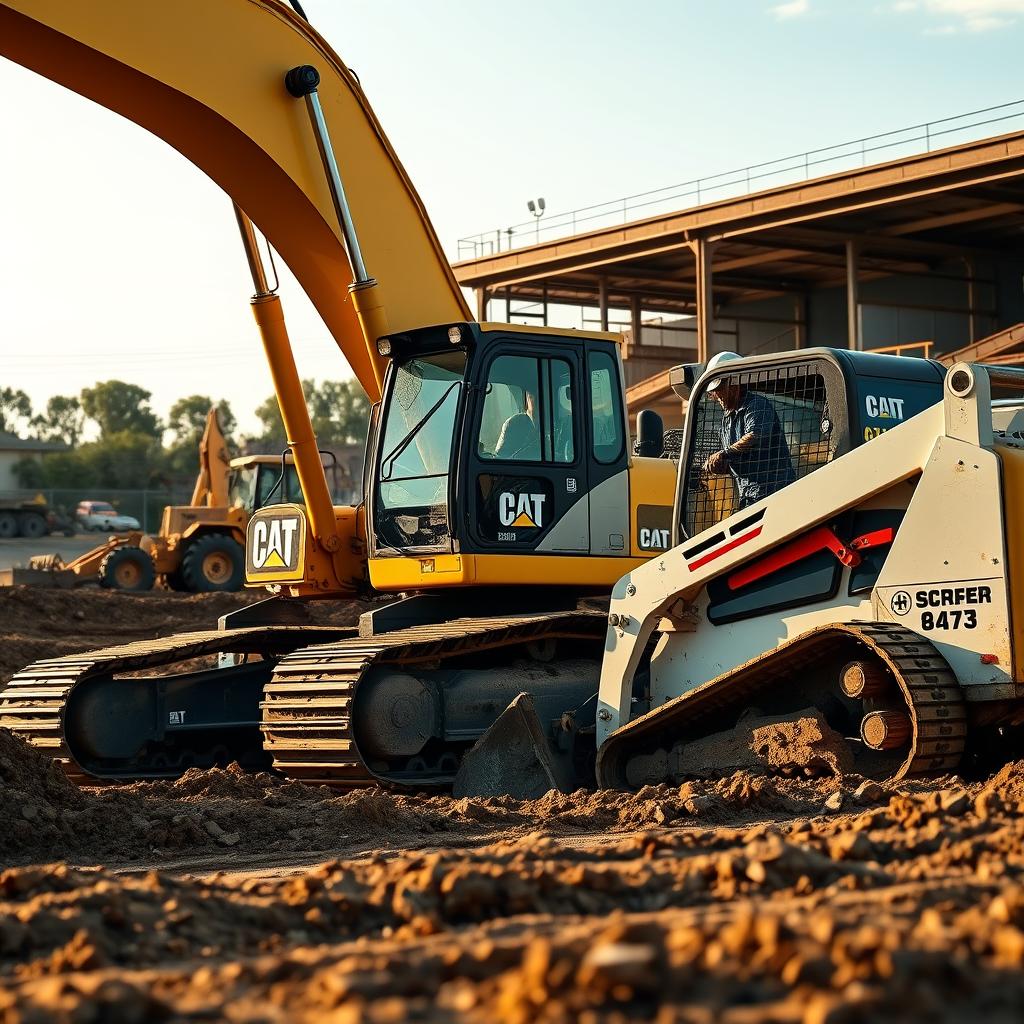
If you've been shopping for insurance for your equipment rental business, you've probably run into both terms: "inland marine insurance" and "equipment floater insurance." Sometimes they're used interchangeably. Sometimes they're not. The distinction matters—especially when you're trying to understand exactly what's covered when an excavator disappears from a customer's job site at 2 a.m. on a Sunday.
Here's a clear breakdown of both, how they relate to each other, and how rental companies should think about structuring this coverage.
The Short Version
Inland marine is a broad category of property insurance that covers goods and equipment that move or are stored away from a fixed location. It's the bucket.
Equipment floater insurance is a specific type of inland marine policy designed for portable and mobile equipment. It's what goes in the bucket—and for equipment rental companies, it's almost always the right policy.
What Is Inland Marine Insurance?
The name "inland marine" is a historical artifact. It traces back to marine cargo insurance, which originally covered goods transported by sea. As commerce expanded inland—first by river, then by rail, then by truck—insurers needed policies that followed goods in transit over land. "Inland marine" stuck as the label.
Today, inland marine insurance covers an enormous range of property that either moves or is used in variable locations. That includes:
- Construction equipment and tools
- Medical equipment used at multiple sites
- Fine art and museum collections on loan
- Electronic equipment operated in the field
- Camera and production equipment
- Contractor's tools and equipment
The common thread is that the property isn't sitting in a fixed, insured location the way inventory in a warehouse might be. It moves. It goes to job sites, customer locations, remote projects. Standard commercial property insurance—which covers a specific address—typically excludes or severely limits coverage for property that leaves the premises. Inland marine fills that gap.
For insurance regulatory purposes, inland marine is classified as a specialty line, which gives underwriters more flexibility to customize coverage terms than they'd have with standard commercial property.
What Is an Equipment Floater?
An equipment floater is an inland marine policy written specifically for portable and mobile equipment. The "floater" language comes from the idea that coverage "floats" with the equipment wherever it goes—not fixed to a location.
For equipment rental companies, an equipment floater is the primary policy protecting your physical assets. It typically covers:
Physical damage and loss Damage to your equipment from collision, upset, fire, vandalism, or operator misuse. This is the bread-and-butter exposure for rental yards.
Theft Theft from job sites, from your yard, or in transit. Given that the National Insurance Crime Bureau (NICB) estimates $300–$400 million in construction equipment is stolen annually in the U.S., this is not theoretical.
Mysterious disappearance Equipment that goes out on rental and doesn't come back—and no one can account for where it went. Standard property policies often exclude mysterious disappearance; equipment floaters written for rental companies typically include it.
Transit coverage Equipment damaged while being transported by your trucks, your trailers, or in some cases by the customer's vehicle. How transit is covered (and by whom) should be clearly defined in your floater terms.
Flood and weather Many equipment floaters extend coverage to flood, earthquake, or weather damage. This matters for rental companies serving contractors in coastal regions or areas with active weather exposure.
Scheduled vs. Blanket Coverage
This is one of the most important structural decisions in setting up an equipment floater—and it directly affects how claims are paid.
Scheduled Coverage
A scheduled floater lists each piece of equipment individually: make, model, year, serial number, and insured value. Coverage is specific to each listed item.
Advantages:
- Clear insured value per unit eliminates disputes at claim time
- Easier to track high-value individual items
- Appropriate for unique or high-value equipment where ACV would be inadequate
Disadvantages:
- Administrative burden for rental yards with large, changing fleets
- New acquisitions may not be covered until added to the schedule
- If you forget to add a piece, it's uninsured
Blanket Coverage
A blanket floater covers a category of equipment (e.g., "all construction equipment") up to a stated total limit, without listing individual units.
Advantages:
- No administrative burden of updating schedules for every purchase
- Newly acquired equipment is typically covered automatically up to the blanket limit
- Well-suited for high-turnover rental operations with frequent additions and disposals
Disadvantages:
- Per-item sublimits may cap coverage on high-value units
- May carry a slightly higher premium rate than scheduled
- Requires accurate total value reporting to avoid co-insurance issues
Many rental companies use a hybrid approach: a blanket floater for standard fleet equipment (skid steers, compressors, light towers) combined with scheduled endorsements for high-value or specialty units (large excavators, cranes, specialized lifts).
How Equipment Floaters Differ from General Liability
This question comes up often: "If the customer damages my equipment, doesn't my liability insurance cover that?"
No. General liability (GL) insurance protects you against claims made by other people—bodily injury or property damage that you or your operations cause to third parties. It does not cover damage to your own property.
The equipment floater is what covers physical damage to your equipment. GL handles claims from customers or third parties who get hurt or suffer property damage. They serve completely different purposes, and you need both.
Why Equipment Rental Companies Need an Equipment Floater Specifically
Standard commercial property policies cover property at a scheduled location. Your equipment doesn't stay at a scheduled location—that's the whole business model. Every day your machines leave the yard, go to job sites you've never seen, get operated by people with varying skill levels, and sit unattended overnight in open fields or unsecured lots.
That exposure is exactly what an equipment floater is designed for. It covers the off-premises, in-use, in-transit risk that standard property insurance doesn't touch.
A few scenarios that illustrate why this matters:
Scenario 1: Customer damages your machine A customer is grading a lot with your mini-excavator and hits an unmarked utility line, damaging the boom arm and the house rotation. Your equipment floater covers the repair. (Your GL would handle it if the damage extended to third-party property—the utility line owner's claim against you, for example.)
Scenario 2: Theft from job site Your skid steer is rented to a landscaping contractor. Over the weekend, it's stolen from the job site. The customer's renters liability coverage (if they have it) may contribute, but your equipment floater is the backstop ensuring you're not waiting months for a subrogation dispute to resolve before you can replace the unit.
Scenario 3: Equipment in transit Your driver is hauling a 10-ton mini-ex on a lowboy trailer. A tire blows, the trailer goes off the road, and the excavator rolls. Equipment in transit coverage under your floater pays the repair or replacement. Without it, you'd be arguing about whether the commercial auto policy's cargo provisions apply.
How CCA Structures This Coverage for Rental Yards
CCA places equipment floater coverage through specialty inland marine markets that understand the rental yard risk profile. That means underwriters who are familiar with high-utilization fleets, short-term rental agreements, and the reality that your equipment is never parked in one insured location for long.
A CCA-structured program for an equipment rental company typically combines:
- A blanket equipment floater for the working fleet, with agreed-value or replacement cost options
- Automatic coverage for newly acquired equipment during the policy year, up to 25%–30% of the total blanket limit
- Transit coverage for equipment in transit by your vehicles or via common carrier
- Mysterious disappearance language appropriate for rental operations
- GPS and security credits built into the rating where applicable
- A theft deductible structure that separates theft losses from other physical damage to allow appropriate deductible sizing for each
If you're currently running your rental operation on a standard commercial property policy or a BOP, there's a strong chance you have significant gaps in how your equipment is protected the moment it leaves the yard. An equipment floater is the solution.
Ready to review your current coverage? CCA can walk through your existing policy and fleet value, identify gaps, and build an inland marine program that actually follows your equipment wherever it goes.
Need this coverage for your rental fleet?
Get a real quote in about 15 minutes — we shop A-rated specialty rental markets.